As a new entrant into the world of Hi-Fi, this Stereonet Melbourne show was the first Hi-Fi show that I’ve attended, and I was keen to hear for myself what the differences were in speaker types, amp types and price ranges. Mainly I wanted to figure out to my own ears, what was snake oil and are tube amps worth chasing for me? I went on a Sunday, arrived around 11am and stayed until 2:30pm. Skipped lunch to fit in more listening. Regretted that by the end of the day.
The short version: a handful of rooms were genuinely excellent, I was indifferent to most, and I left with a record label to research and listen to.
Sound Lab
This was the highlight of the show and where I spent the most time. These presented the most ‘real-world’ sound that I look for in Hi-Fi setups. I’m interested in atmosphere, depth, and the ability for speakers to present the feeling of being in the room with the artists performing the music. That being said, I also value a warmer, natural sound that is easy to listen to over extended periods rather than for critical listening in studio or music-production environments.
These are electrostatic speakers. Instead of a magnetic driver, they use a large membrane that responds to an electrical field. No moving cone, so the audio response is faster. The sound comes from the entire membrane surface rather than a point source, which reduces reflections. If the panels run floor to ceiling, you also eliminate the top and bottom boundary reflections that cost conventional speakers energy. Line arrays work on the same principle. Fundamentally, electrostats are capacitors which is interesting compared to magnetic speakers.
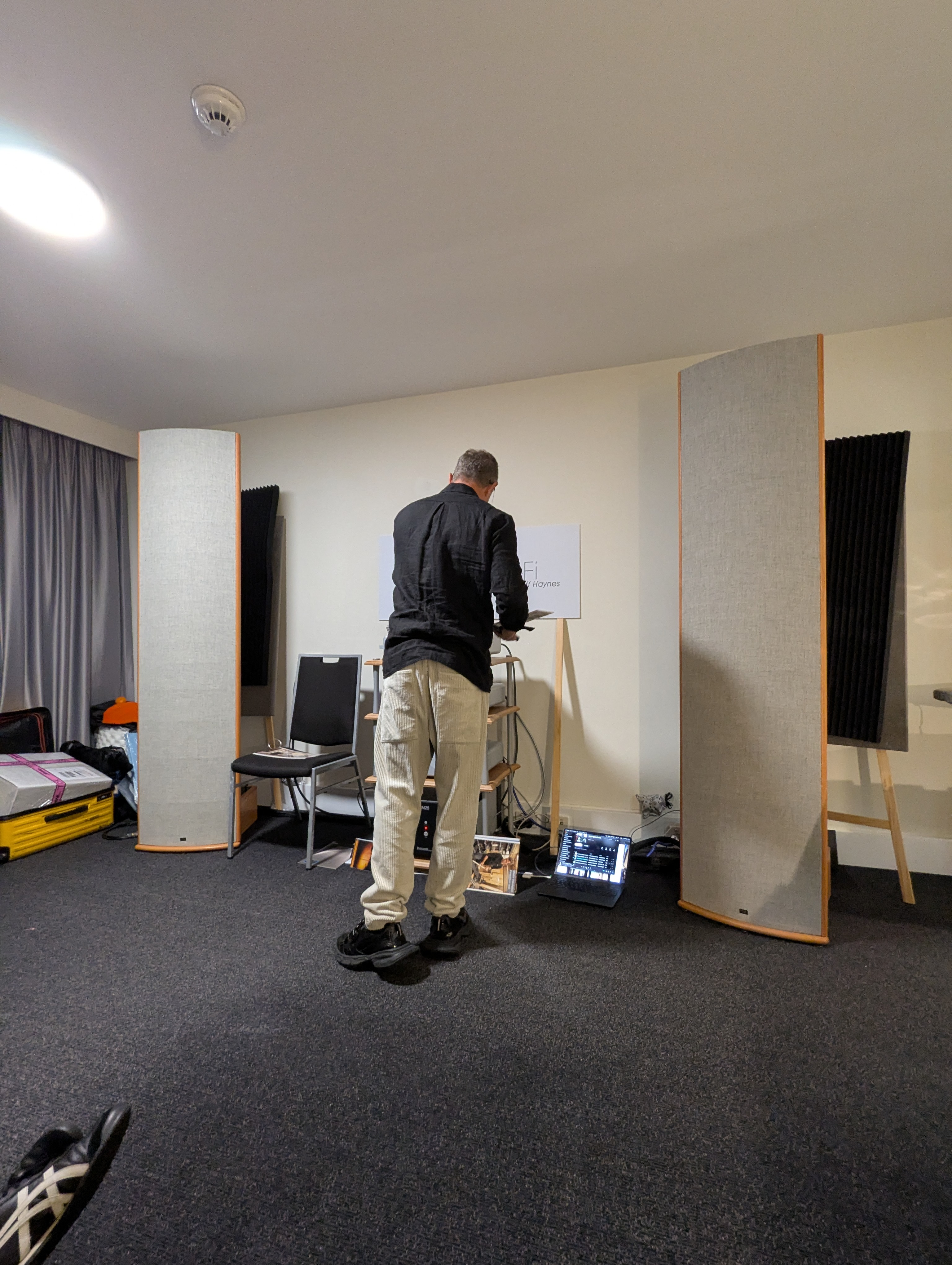
Chris Stubbs, the distributor for Sound Lab was running the demonstration and cycled through some CDs that really showcased the strengths of the speakers. It was one of those situations where you stop thinking about the equipment and just listen. The only real limitation with these, and electrostats in general are the bass, but electrostats aren’t really about power or weight. For live recordings, acoustic instruments and vocals, they’re hard to beat.
What I didn’t expect from Stereonet was to leave with a newfound appreciation for live recorded world music. Chris had been playing albums from MA Recordings — a Japanese label that records acoustic performances using only two omni-directional microphones. No processing, no overdubs. The two that stood out:
Listening back at home, I noticed these recordings were doing a lot of heavy lifting in making the room sound so good. Which isn’t a criticism of the speakers — it’s more of a reminder that the recording matters as much as the playback chain.
The speakers are around $60k paired with PS Audio electronics. One thing to note: the power amp shut itself off randomly at one point, which was a bit awkward.
Airtight
One of the other HeyNow Hi-Fi rooms had a Japanese Airtight preamp and tube power amp.
These look great. The build quality is very purposeful without being flashy. The sound matched — natural, musical, and easy to sit with for a long time without fatigue. These are definitely a contender for a purchase in future, although I’m still leaning towards amps from SunValley or Sun Audio for that classic tube experience.
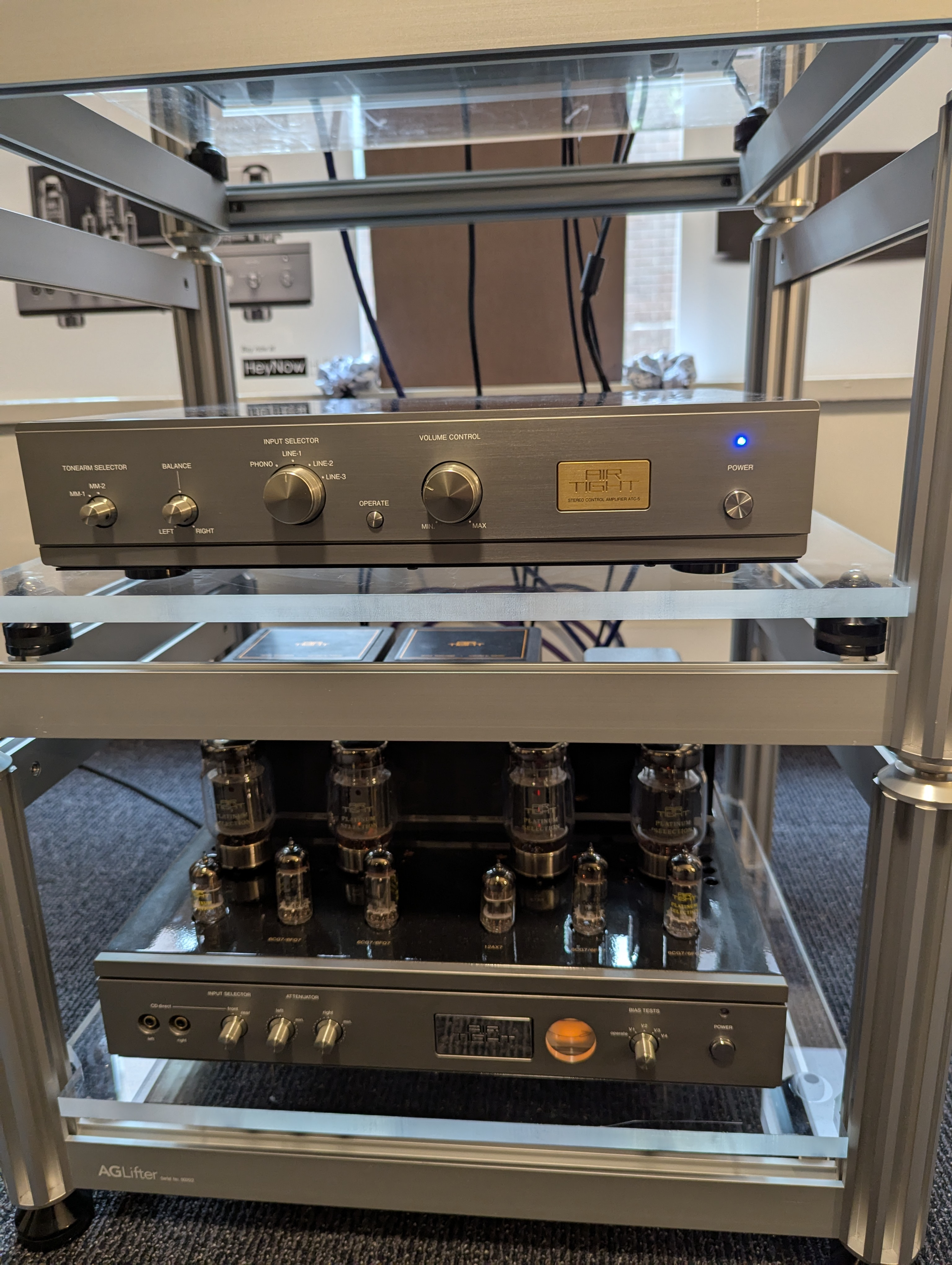
They were sitting on an AGLifter equipment stand which also looked nice. Industrial, reminiscent of 80/20 aluminium extrusion. I looked it up afterwards. Fifteen thousand dollars for a stand. Absolutely not for me.
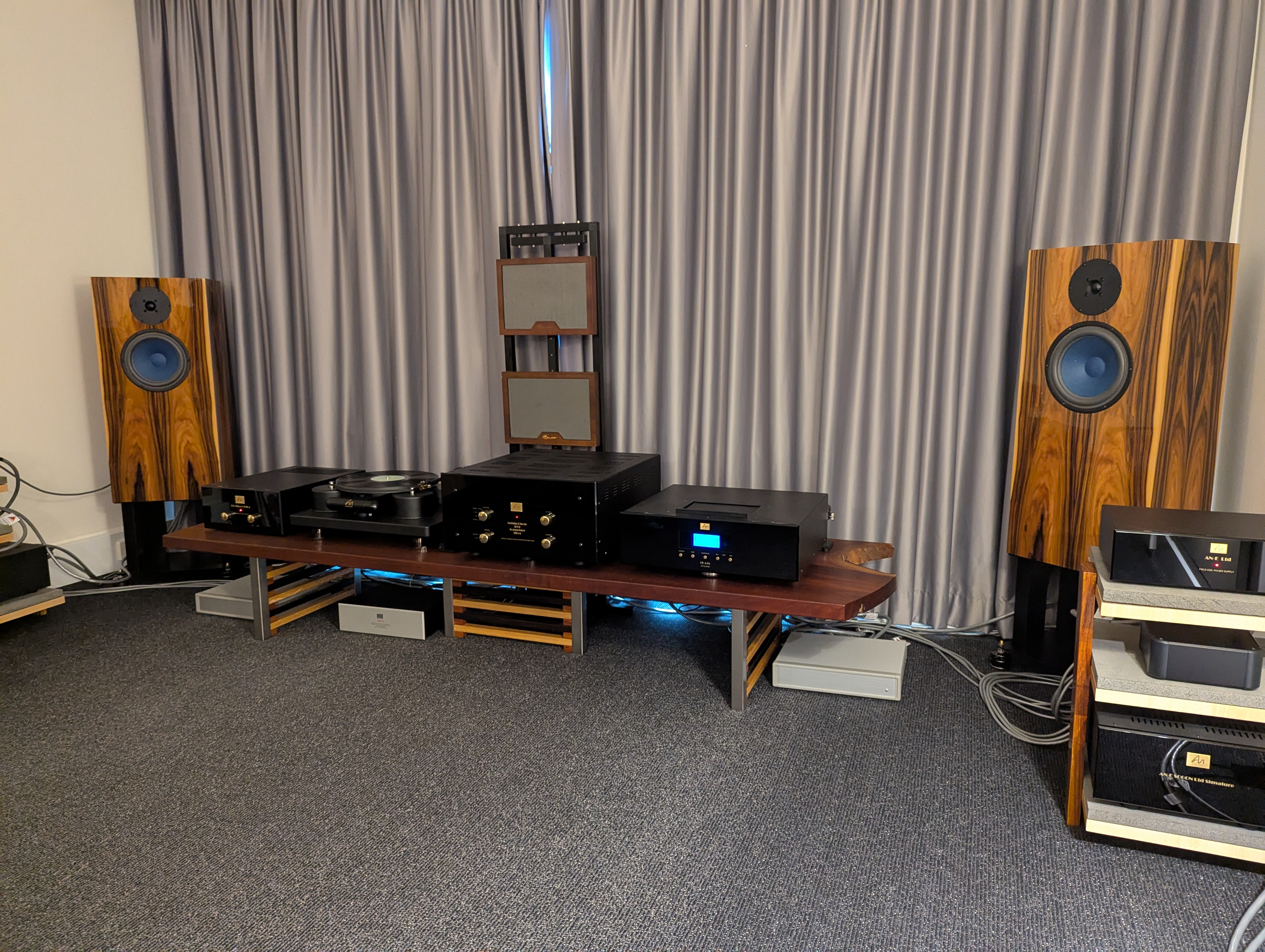
Audionote
Another highlight. Warm, dimensional, very engaging. This room was running 300B tubes in the power amp. It confirmed what I suspected about my own preferences — I’m drawn to tubes, and now I have some concrete evidence for it rather than just a gut feeling based on research. What I noticed here is that tube amplifiers tend to lend a more expressive and atmospheric sound, but maybe that’s just confirmation bias at play.
It was also the room that made diminishing returns feel very real. The speakers alone were priced above $300k. The full system was probably close to half a million. It sounded excellent. It did not sound half a million dollars better than anything else I heard that day.
The gap between a modest and a good system is real and audible. After that point, the increments get smaller and the costs get larger very quickly when we start to enter snakeoil territory.
Secret Chord Analogue and Elekit TU-8900
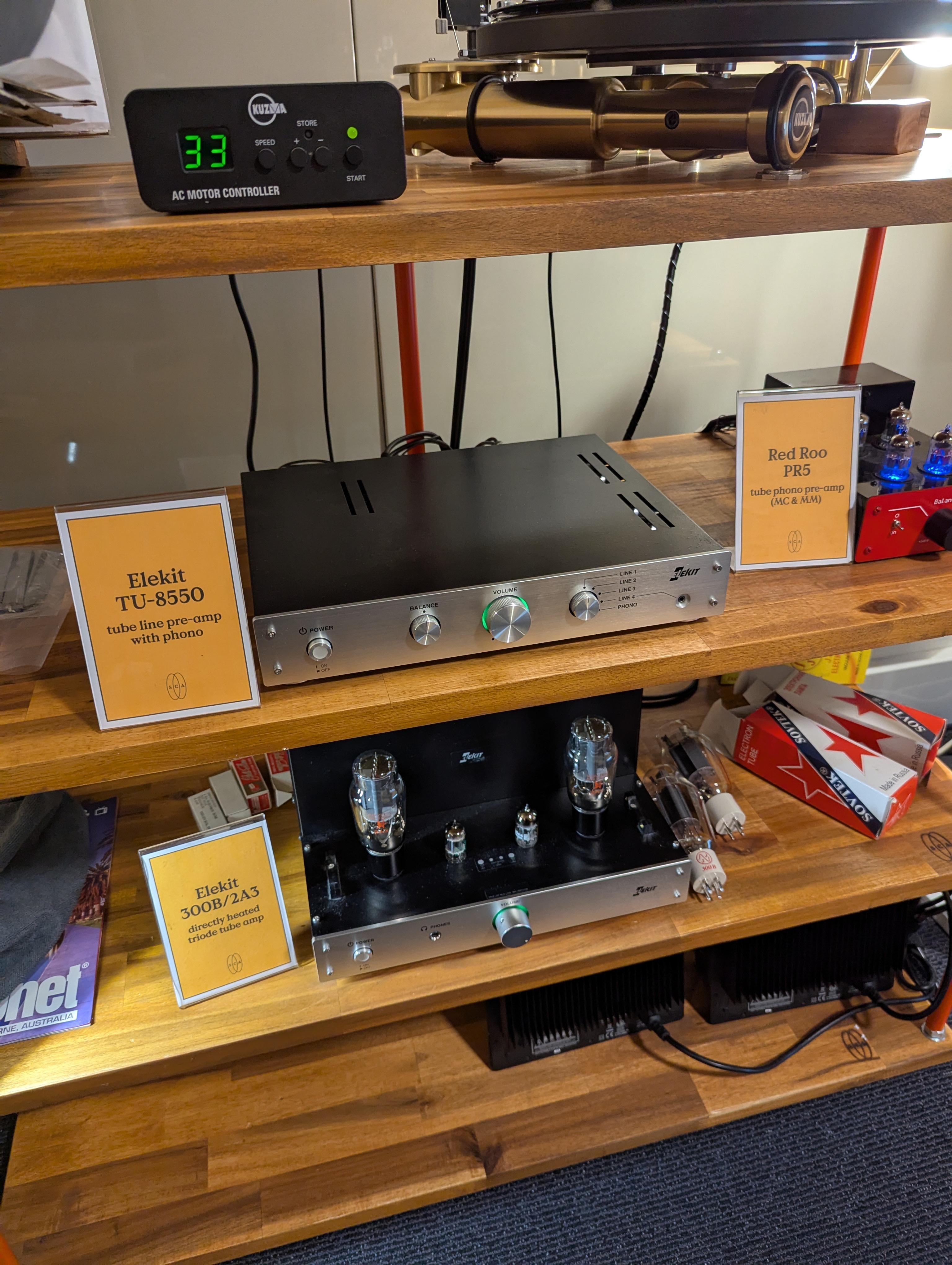
This was one of my main reasons for going to the show, to to hear the Elekit TU-8900 300B/2A3 kit amp from Secret Chord Analogue.
In this configuration, it was running 300B tubes with open baffle speakers and an iPhone as a digital source with a separate DAC.
Put on Round Midnight by Miles Davis. For starters, I guess it was too loud but it was pretty unpleasant to listen to. The top end was sharp and fatiguing and really left a poor impression. I don’t think this was an issue of the amplifier, but more likely a combination of the source, speakers and room dynamics. This was one of the few cases of rooms where there didn’t seem to be much room treatment if any and I think the high frequencies were echoing and amplifying around the room.
This was a bit of a letdown, and the price of this kit with the upgraded Lundahl transformers is around $4,600. That’s heading into the cost territory of a pre-built tube amp so I’m not sure the total cost is really justified in this case. Sure, as a learning experience but at that point it’s probably better to try a point-to-point design. Without the upgrades, this kit is around $2,000 which is a bit more palatable as an entry foray into the 2A3/300B tube space.
Fyne Audio
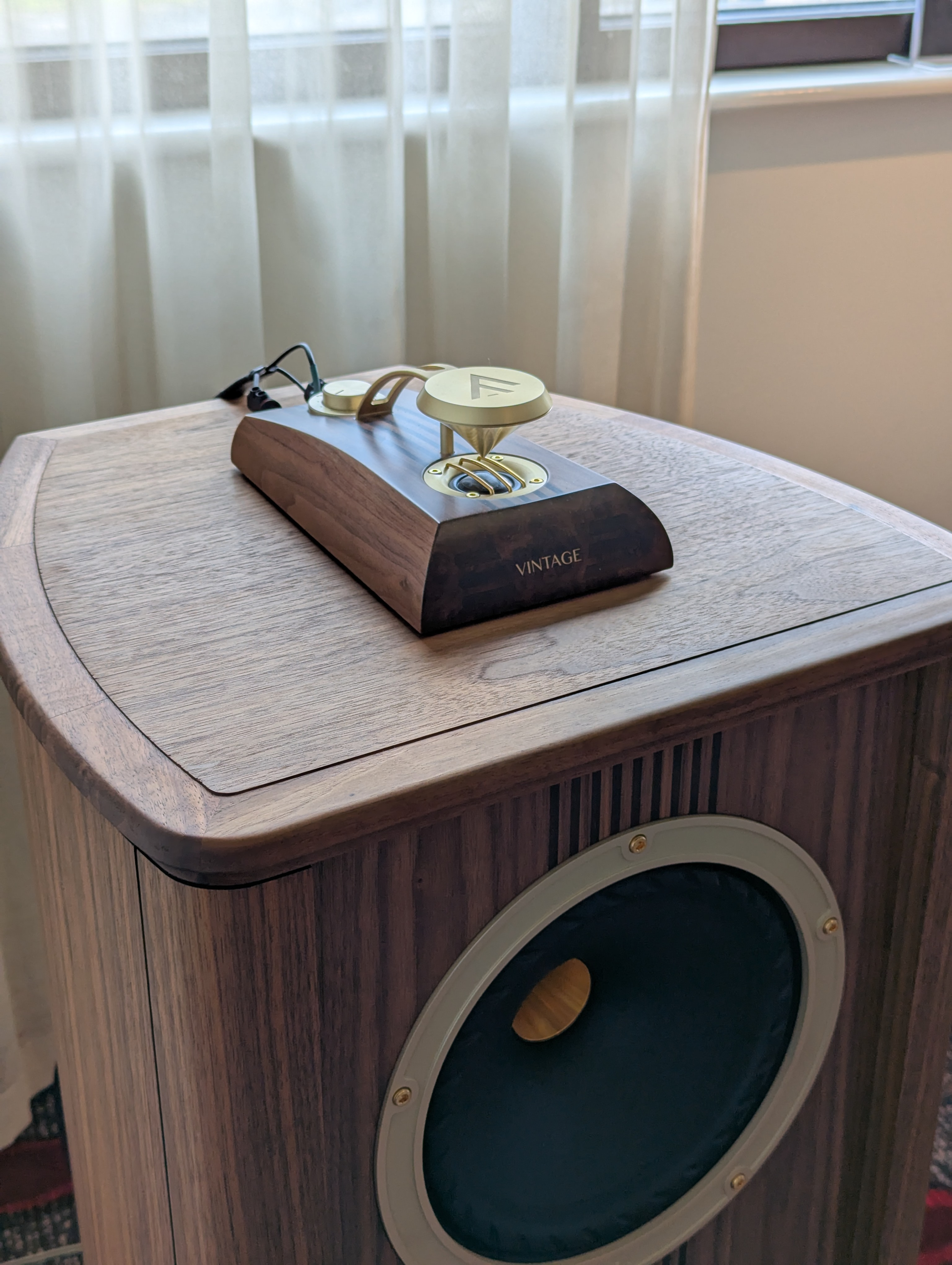
There was a small room with a pair of Fyne Audio Vintage speakers, along with super tweeters. These sounded incredible in the small room and really gave an immersive 3D sound with one of the songs that was played on repeat throughout the show that had a panned clap sound. These speakers retail for $60k, so this is one case where the exorbitant price tag does carry some weight.
Overall, a nice design that I can get behind, but the price is untenable. Perhaps this is their top-of-the-range offering though.
A Few Others
- Capella - French active monitors, bookshelf sized. Solid bass that outperformed the towers nearby. I kept looking for a sub. There wasn’t one.
- Audiomagic - Harbeth Compact speakers, Lumin as source. Great in a small room. Bigger sound than you’d expect.
- McIntosh - Clean and refined. Slightly sharp, possibly the room. The glowing fascia remains a mystery to me.
- Focal - Large, impressive looking speakers. Left no impression.
- SpectraFlora - Australian-made waveguide speakers. Strange looking, odd marketing in a way that doesn’t feel particularly premium. But the sound was easily in my top three or four of the day. The engineering is clearly good. Worth keeping an eye on.